
Rule of thumb: a garage door itself can last 20 to 30 years, but the opener that runs it usually taps out around 10 to 15. That one sentence ends most kitchen-table arguments, but it's not the whole story, because a lot of doors never make it to year 20 and a lot of openers die at year 7.
The Door and the Opener Are Two Different Clocks
People talk about "the garage door" like it's one machine, but you're really dealing with two separate systems that wear out on their own schedules.
The Door (Panels, Track, Hardware)
The physical door — steel or wood panels, hinges, rollers, track — is built to last decades. Steel doors especially can go 25-30 years if the panels aren't dented and the hardware is kept lubricated. What usually ends a door's life early isn't age, it's damage: a cracked panel from a backed-into bumper, rust eating through the bottom section, or rollers that seized up years ago and were never replaced.
The Opener (Motor, Gears, Logic Board)
The opener is an appliance, closer in lifespan to a water heater than to a door. Chain and belt-drive motors typically run 10-15 years. The gears, the circuit board, and the safety sensors all have a shelf life, and humidity, dust, and temperature swings in an uninsulated garage shorten it. If your opener predates your phone's ability to take a decent photo, it's probably near the end even if it still "works."
What Shortens the Life of Either One
- Winter salt and moisture: Road salt tracked in on tires and boots, combined with melting ice and humidity swings, accelerates rust on the bottom bracket, hinges, and track. Garages that stay damp all winter age hardware faster than dry ones.
- Big temperature swings: Ohio's shift from humid summer heat to dry, cold winters stresses the steel panels and the weatherstripping. Materials expand and contract, seals crack, and gaps appear that let in more moisture next season.
- Skipped lubrication: Dry rollers, hinges, and tracks don't just get noisy — they wear down faster and put more strain on the opener motor, which shortens its life too.
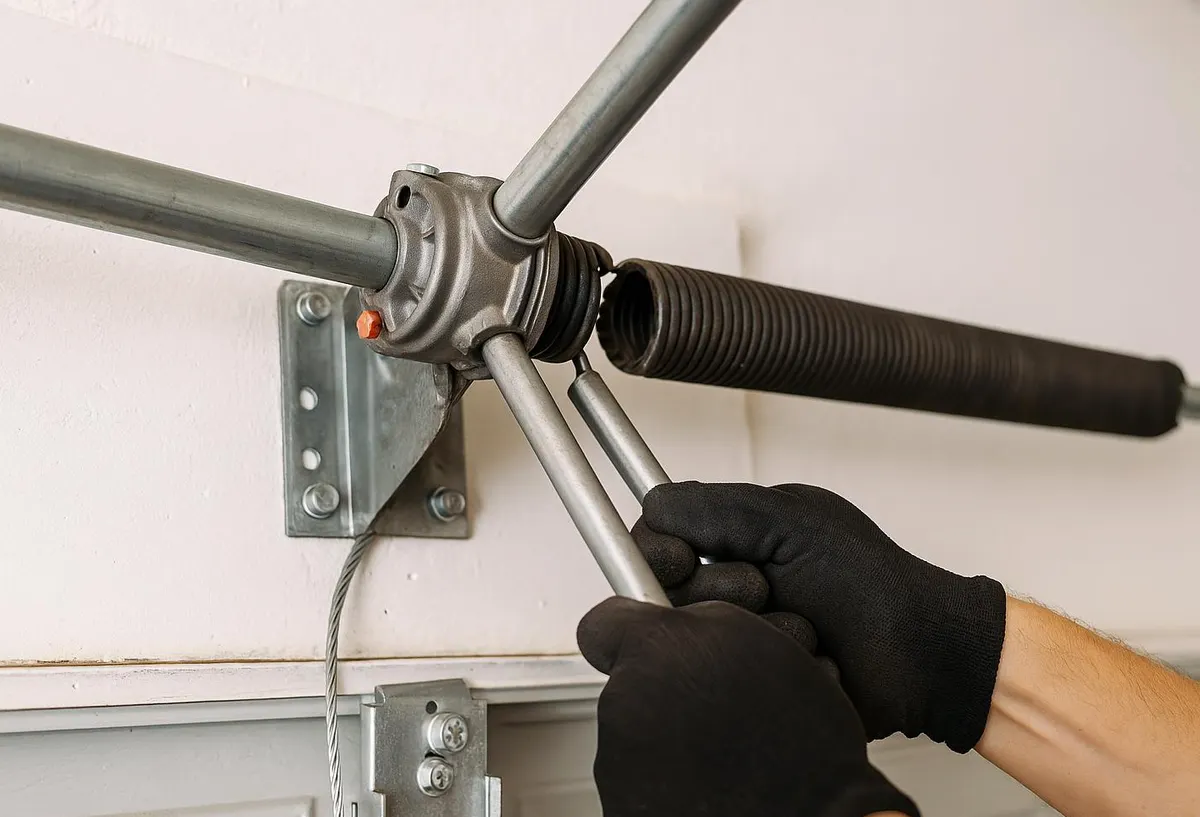
- The wrong torsion springs: Springs rated for the wrong door weight cycle out early, and a door running on a tired or mismatched spring forces the opener to work harder on every cycle, aging it faster.
- DIY fixes that don't hold: A bent track hammered back into shape, a spring tensioned by guesswork, or a cheap universal remote jammed into an older opener board can all shave years off the system instead of adding them.
- Heavy daily use: A door that opens and closes 6-8 times a day for a household with two commuters and kids in sports wears out meaningfully faster than one used twice a day.
What Actually Extends It
- Lubricate twice a year. Hinges, rollers, and the track itself. Do it before winter and again in spring, since that's when temperature swings are hardest on moving parts.
- Check the weatherstripping every fall. Cracked or flattened seals let in cold air, ice melt, and moisture that speeds up rust on the bottom panel and track.
- Keep the track clear of salt and grit. A quick wipe-down after a messy winter week keeps corrosive residue from sitting on the hardware.
- Get the door balance checked yearly. An unbalanced door makes the opener motor strain on every single cycle, which is one of the fastest ways to kill a motor early.
- Don't ignore small noises. A grinding roller or a hum that wasn't there last month is cheap to fix now and expensive to ignore until something snaps.
Signs It's Aging Normally vs. Signs Something's Actually Wrong
Normal aging looks like: a little more noise than it used to make, slightly slower response time on cold mornings, or hardware that needs lubrication more often than it did five years ago. None of that means replacement is imminent.
Signs of a real problem: the door reverses on its own, one side visibly sags lower than the other, the opener runs but the door doesn't move, or you hear a loud bang (that's very likely a broken spring, and it's not a wait-and-see situation). Those point to a specific failure, not general wear, and they're worth a call regardless of the door's age.
When to Call South Vienna Garage Door
If you're trying to figure out whether your door has a few good years left or is quietly heading toward a breakdown, that's exactly the kind of thing worth a second opinion before you spend money guessing. South Vienna Garage Door can run a full garage door maintenance check — balance, spring tension, track alignment, hardware wear — and tell you honestly whether you're looking at a tune-up or a bigger repair. If the spring is the culprit (and after an Ohio winter, it often is), our spring replacement service gets the door back to a safe, properly balanced state instead of patching around the real issue. We serve homeowners and businesses across South Vienna, Springfield, Enon, Catawba, South Charleston, Mechanicsburg, Urbana, and Cedarville, and we'll give you a straight answer about what your door and opener actually need, not just what's easiest to sell.
If your garage door has been making you wonder whether it's on borrowed time, call South Vienna Garage Door today for an honest inspection and a clear answer, right here in South Vienna, OH.